
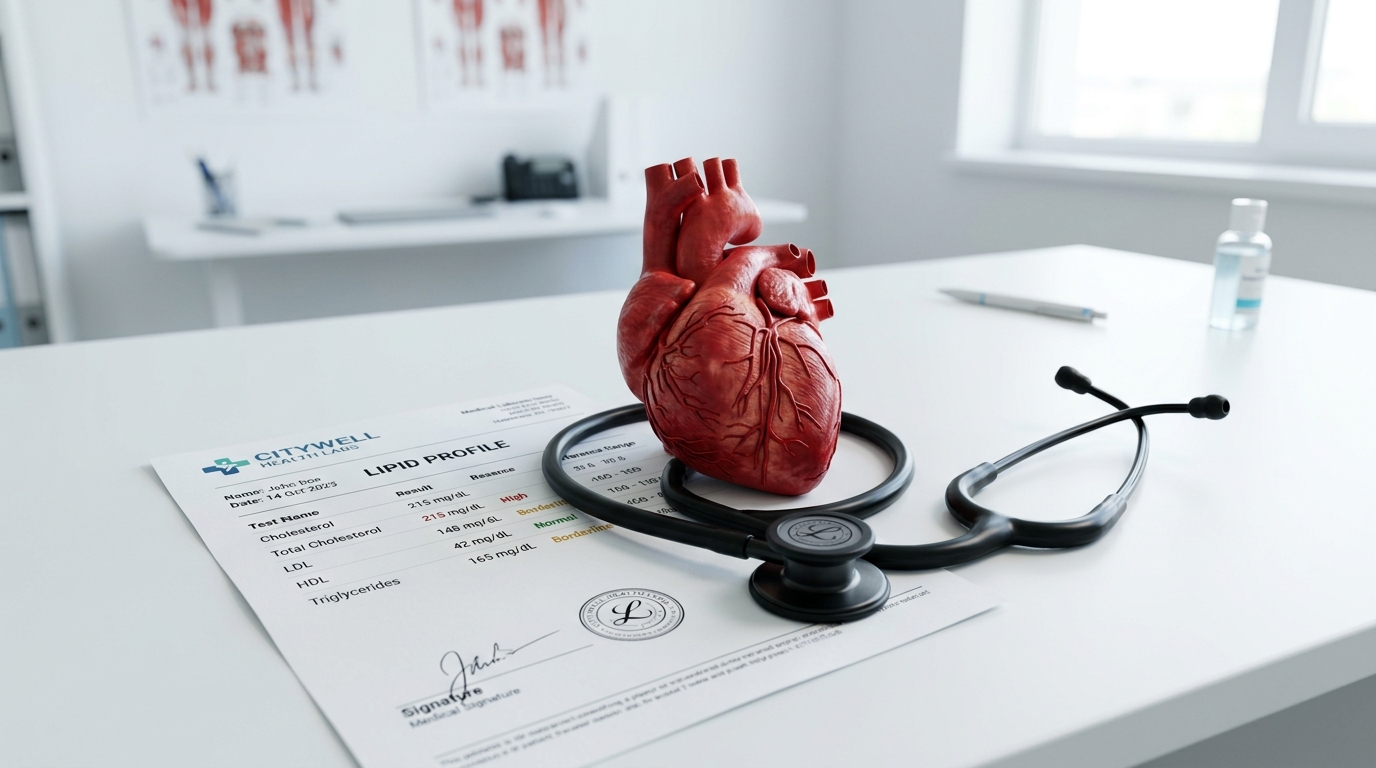
Understanding Blood Lipids
Cardiovascular disease remains the leading cause of premature mortality across South Asia. Fortunately, comprehensive lipid profiling provides a direct window into arterial health.
Demystifying the Key Markers
- Total Cholesterol: The aggregate quantity of cholesterol circulating in your bloodstream.
- Low-Density Lipoprotein (LDL): Known as "bad" cholesterol. Elevated LDL particles penetrate the endothelium of coronary arteries, creating atherosclerotic plaques.
- High-Density Lipoprotein (HDL): Known as "good" cholesterol. HDL acts as a vascular scavenger, carrying excess cholesterol back to the liver for clearance.
- Triglycerides: The chemical storage form of excess caloric intake. Strongly linked to insulin resistance and acute pancreatitis when severely elevated.
Recommended Target Ranges
- Total Cholesterol: Under 200 mg/dL
- LDL Cholesterol: Under 100 mg/dL (under 70 mg/dL for high-risk cardiac patients)
- HDL Cholesterol: Greater than 40 mg/dL (men) or 50 mg/dL (women)
- Triglycerides: Under 150 mg/dL
Actionable Steps for Lipid Management
- Cardiovascular Exercise: 30 minutes of brisk walking 5 days a week raises protective HDL levels.
- Eliminate Industrial Trans Fats: Avoid repeatedly reheated commercial frying oils commonly found in street snacks.
- Omega-3 Fatty Acids: Incorporate walnuts, chia seeds, and grilled fish to lower circulating triglycerides.